

Project Hail Mary and the companion problem
From Cast Away to Project Hail Mary, the solo-performance film keeps proving that one actor, no dialogue, and nowhere to go can be a $700 million bet -- if the star is big enough.
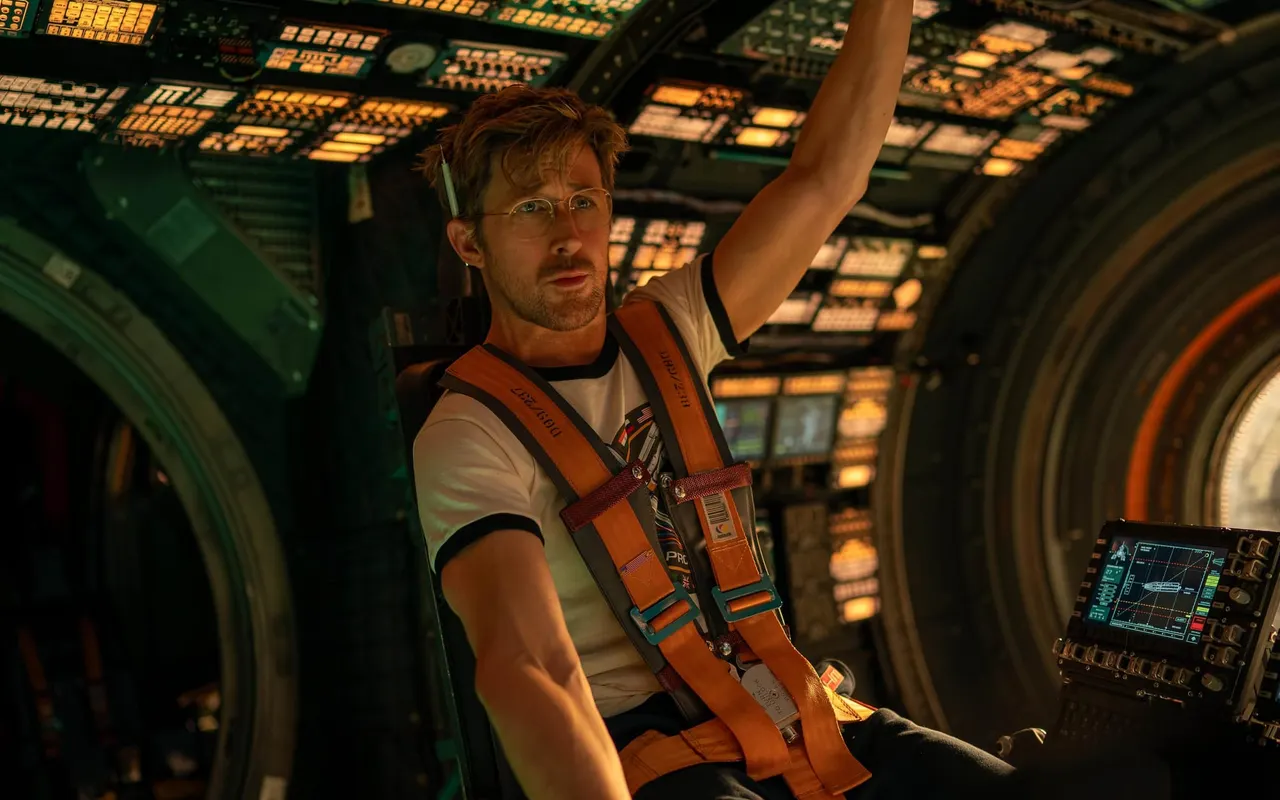
There's a type of film I keep coming back to. One actor, usually alone, stuck somewhere they shouldn't be. A desert island, a coffin, a damaged sailboat, the surface of Mars. The camera doesn't cut away to a B-plot. There's no ensemble waiting in the wings. It's just one person trying not to die, and you either buy the performance or you don't.
This weekend, Project Hail Mary opened to $80.5 million domestic and $141 million worldwide. That's the biggest opening of 2026 so far, and only the second non-franchise film in a decade to clear $80 million on its first weekend (the other was Oppenheimer). Ryan Gosling spends most of the film alone on a spaceship, piecing together his memory and talking to an alien made of rock. It shouldn't work as a blockbuster. But it does, and the reasons say a lot about how this weird little subgenre actually works.
Where it comes from
Solo-performance films have been around for decades. Jeremiah Johnson (1972) put Robert Redford alone in the mountains. Silent Running (1972) gave Bruce Dern a spaceship greenhouse and three robot drones. But the modern version of this thing probably starts with Cast Away in 2000. Tom Hanks, a volleyball, a Pacific island, $429 million worldwide. The movie proved you could build a studio tentpole around one actor doing nothing but surviving.
Since then, the format keeps resurfacing. 127 Hours, Gravity, All Is Lost, Life of Pi, Buried, Locke, Moon, The Martian, Arctic. The specifics change but the structure doesn't: isolate a character, remove human contact, and see what's left.
The companion problem
Here's the thing about putting one person on screen for two hours: they need someone to talk to. Not for the character's sake, necessarily, but for the audience. Pure internal monologue or total silence is hard to sustain at feature length. Only a few films even try (All Is Lost has almost no dialogue; Arctic barely more).
So most of these movies invent a release valve. Cast Away has Wilson the volleyball. Moon has GERTY, the Kevin Spacey-voiced AI. I Am Legend has the dog. Project Hail Mary has Rocky, an alien who communicates through musical tones. The companion is almost always non-human, which is the trick: you get dialogue without breaking the isolation. The character is still alone in every way that matters.
The box office split
What's interesting is how cleanly this subgenre divides commercially. The big hits pair the solo-performance concept with a major star and heavy production value. Cast Away made $429 million. Gravity made $723 million. I Am Legend hit $585 million. Life of Pi earned $609 million. Project Hail Mary is on pace to join that tier.
Then there's the other side. Moon cost $5 million and grossed about $10 million worldwide. Locke, All Is Lost, Buried, Arctic -- all played as limited-release arthouse films, grossing in the single digits. Critically respected, sometimes beloved, but not blockbusters.
The isolation premise alone doesn't sell tickets. Star power and spectacle do. Sandra Bullock floating through debris in IMAX 3D is a different commercial proposition than Robert Redford silently bailing water on a sailboat, even if the underlying structure is the same.
Why Project Hail Mary works
Project Hail Mary landed in the sweet spot. Gosling is a genuine movie star. Phil Lord and Christopher Miller know how to make smart material play broad. Drew Goddard, who adapted The Martian, wrote the screenplay. Andy Weir's novel was a bestseller. And the film leaned hard into premium formats: 55% of ticket sales came from IMAX, Dolby, and other large-format screens.
It also earned an A CinemaScore and a 96% audience score on Rotten Tomatoes. With no real competition until The Super Mario Galaxy Movie on April 1, the legs should be long.
The irony is that Gosling's last astronaut movie, First Man (2018), made only $105 million worldwide. Same actor, same general setting, wildly different result. Tone matters. First Man was a brooding, melancholy character study. Hail Mary is warm, funny, and built for crowds. Same subgenre, different approach, and the gap at the register is enormous.
What these films share
Strip away the settings and budgets and you're left with a simple bet: can one person hold a screen? The best of these movies make that bet feel inevitable. Hanks talking to a volleyball. Bullock gasping inside a tumbling Soyuz capsule. Sam Rockwell arguing with himself on a lunar base. Ryan Reynolds screaming inside a coffin.
It's the most actor-dependent form of filmmaking there is. No supporting cast to pick up slack, no subplot to cut to when energy flags. Just a face, a situation, and the question of whether you care enough to keep watching.
Based on this weekend's numbers, the answer is yes. At least when you give them a spaceship and Ryan Gosling.
Other films to check out if you like this genre...
Survival / Isolation
- Cast Away (2000): Tom Hanks stranded alone on a Pacific island after a plane crash.
- All Is Lost (2013): Robert Redford alone on a damaged sailboat with almost no dialogue.
- 127 Hours (2010): James Franco as Aron Ralston, trapped by a boulder in a Utah canyon.
- Arctic (2018): Mads Mikkelsen surviving alone in the Arctic with almost no dialogue.
- The Shallows (2016): Blake Lively stranded on a rock offshore, stalked by a shark.
- Touching the Void (2003): A docudrama about a mountaineer left for dead, depicting his solo crawl to survival.
- Adrift (2018): Shailene Woodley alone on a damaged sailboat after a hurricane.
- Open Water (2003): Two divers stranded in open ocean after their boat leaves without them.
- Rescue Dawn (2006): Christian Bale as a POW escaping into the jungle with extended solo survival.
Journey / Wilderness Solo
- Life of Pi (2012): Suraj Sharma adrift on a lifeboat with a Bengal tiger.
- Wild (2014): Reese Witherspoon hiking the Pacific Crest Trail alone, mostly solo with flashbacks.
- Into the Wild (2007): Emile Hirsch as Chris McCandless living alone in the Alaskan wilderness.
- Jeremiah Johnson (1972): Robert Redford as a mountain man living in isolation.
- The Way Back (2010): An ensemble, but long stretches of isolated survival across Siberia and the Gobi Desert.
- Gravity (2013): Sandra Bullock alone in orbit after a debris strike.
- The Martian (2015): Matt Damon stranded solo on Mars, though it cuts to NASA on Earth.
Sci-Fi Isolation
- Moon (2009): Sam Rockwell as a lone worker on a lunar mining base nearing the end of a solo contract.
- Silent Running (1972): Bruce Dern alone on a spaceship greenhouse with only robot drones for company.
- Solaris (1972): Tarkovsky's slow-burn sci-fi with a lone psychologist on a space station.
- Passengers (2016): Chris Pratt entirely alone on a spaceship before Jennifer Lawrence's character wakes.
- Cargo (2017): Martin Freeman largely alone in post-apocalyptic Australia with an infant.
- I Am Legend (2007): Will Smith as essentially the only living human in New York.
Confined Space / Psychological Thriller
- Locke (2013): Tom Hardy alone in a car for the entire film, only interacting via phone calls.
- Buried (2010): Ryan Reynolds trapped in a coffin underground for the entire film.
- Wrecked (2010): Adrien Brody wakes up alone in a car wreck in the woods with no memory.
- Enemy (2013): Jake Gyllenhaal in a disorienting psychological thriller where he's essentially the only character that matters.

